

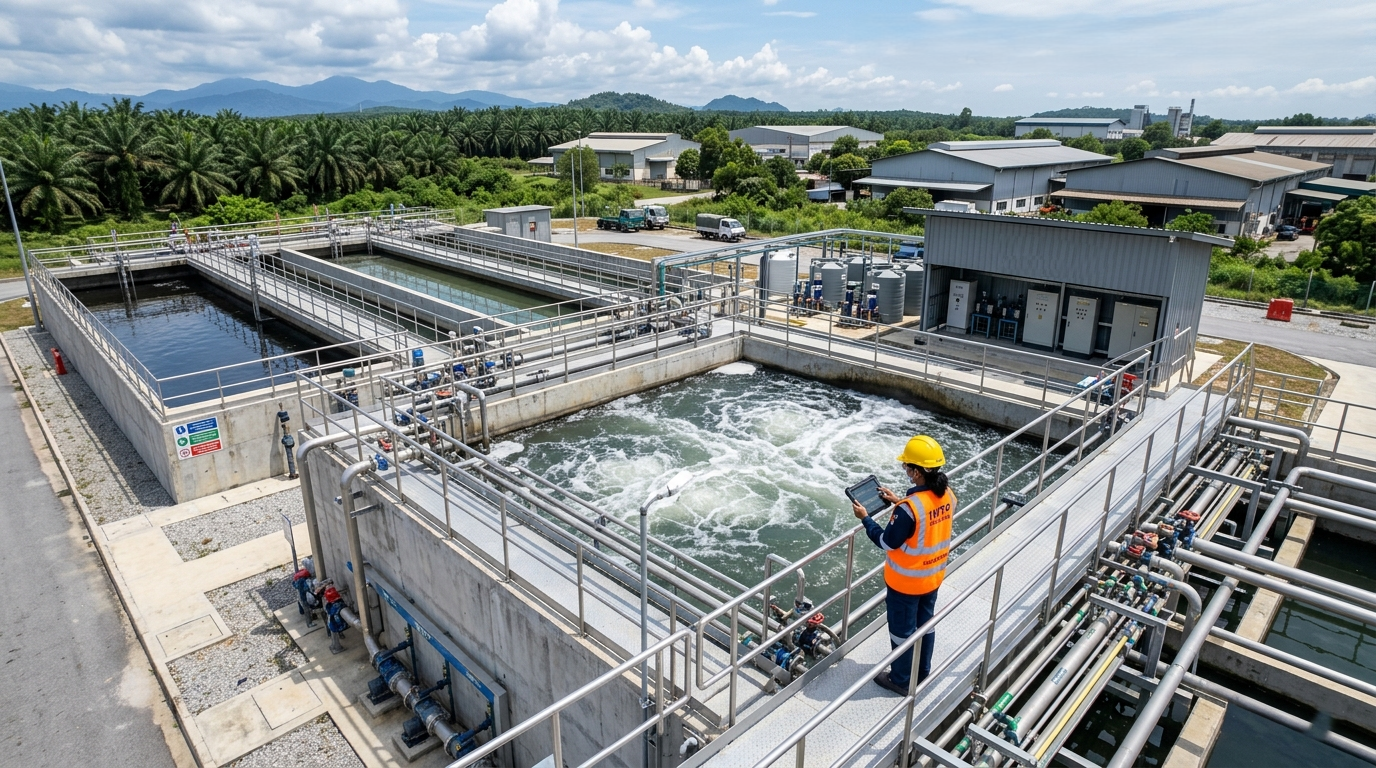
How to Choose the Right Wastewater Treatment System in Malaysia for Industrial Compliance and Cost Efficiency
Industrial facilities in Malaysia operate under strict environmental requirements. Wastewater cannot be discharged without proper treatment and system design decisions directly affect compliance, operational cost and long-term reliability.
Selecting a wastewater treatment system Malaysia is not about choosing a standard setup. It requires a clear understanding of wastewater characteristics, treatment processes and system integration.
Understanding Industrial Wastewater Treatment Requirements in Malaysia
Compliance and discharge standards
Industrial wastewater discharge in Malaysia is regulated under the Environmental Quality Act 1974 and the Environmental Quality (Industrial Effluent) Regulations 2009, enforced by the Department of Environment Malaysia.
These regulations define allowable discharge limits for parameters such as:
- pH
- chemical oxygen demand (COD)
- suspended solids
- oil and grease
Facilities must comply with either Standard A or Standard B, depending on the discharge location. Standard A applies to environmentally sensitive areas and has stricter limits.
Non-compliance may result in fines, legal action or operational restrictions. A properly designed wastewater treatment Malaysia solution ensures consistent compliance through controlled treatment and monitoring.
Variability of industrial wastewater
Industrial wastewater varies significantly depending on the process:
- manufacturing may produce high chemical loads
- food processing generates organic-rich wastewater
- cooling systems introduce scaling and biological contaminants
Because of this variability, standardized systems often underperform. Effective treatment requires customization based on actual wastewater characteristics.
Key Components of a Wastewater Treatment System in Malaysia
A complete wastewater treatment system in Malaysia typically includes multiple treatment stages.
Physical treatment processes
These remove large solids and suspended matter:
- screening and filtration
- sedimentation
- oil and grease separation
They protect downstream equipment and improve system efficiency.
Chemical treatment processes
Chemical treatment ensures stable and controlled performance:
- coagulation and flocculation
- pH adjustment
- oxidation
Accurate dosing is critical to avoid inefficiency and excessive sludge generation.
Biological treatment processes
Biological systems break down organic pollutants:
- aerobic treatment
- anaerobic digestion
- activated sludge systems
These processes are essential for reducing organic load before discharge.
Factors to Consider When Choosing a Wastewater Treatment System in Malaysia
Wastewater characteristics and load
System design must be based on actual data. Key parameters include:
- pH
- total suspended solids
- COD and chemical composition
- flow rate
Accurate testing ensures the system is correctly sized and configured.
System integration and automation
Modern wastewater systems integrate:
- automated dosing systems
- sensors and monitoring devices
- digital control platforms
Monitoring is not optional. Malaysian regulations require proper system operation and effluent monitoring. Automation improves consistency and reduces human error.
Chemical treatment strategy
Chemical selection directly affects:
- treatment efficiency
- sludge production
- operating cost
Treatment chemicals and system design must work together. Poor coordination leads to unstable performance and higher cost.
Lifecycle cost, not just capital cost
Initial cost is only one part of the investment. Long term cost includes:
- chemical consumption
- energy usage
- maintenance
- downtime risk
A well-designed system reduces total cost of ownership by improving efficiency and reliability.
Scalability and future expansion
Industrial operations change over time. A wastewater treatment system should be:
- scalable for increased production
- adaptable to changing wastewater composition
Modular design allows expansion without full system replacement.
Common Mistakes When Selecting Wastewater Treatment Systems
Choosing based on price alone
Low-cost systems often lack proper control and monitoring. This leads to higher operating costs and compliance risks.
Ignoring chemical and system interaction
Treatment performance depends on both equipment and chemicals. Poor integration results in unstable operation.
Lack of monitoring and data tracking
Without monitoring:
- process deviations are not detected
- compliance becomes inconsistent
Monitoring systems are essential for maintaining stable performance.
Why Integrated Wastewater Treatment Systems Improve Performance in Malaysia
Traditional approaches separate:
- chemical suppliers
- equipment providers
- service contractors
This can create gaps in system performance.
An integrated approach combines:
- system design
- chemical treatment
- dosing and control
- monitoring and testing
This improves coordination, efficiency and long-term reliability.
Step-by-Step Guide to Selecting a Wastewater Treatment System in Malaysia
Step 1: Conduct detailed water analysis
Establish baseline data using laboratory testing.
Step 2: Define compliance targets
Align system design with Standard A or Standard B requirements.
Step 3: Evaluate solution providers
Look for experience in customization, integration and process control.
Step 4: Assess total cost of ownership
Include capital cost, operating cost and maintenance.
Step 5: Implement monitoring and optimization
Use monitoring systems to maintain consistent performance and compliance.
Choosing the appropriate treatment process is only one part of an industrial wastewater project. Businesses looking for a wastewater treatment system in Malaysia can also explore Insignia Water’s wastewater treatment technology and MBBR solutions.
Conclusion
Selecting the right wastewater treatment Malaysia solution requires more than choosing equipment. It involves understanding wastewater characteristics, applying appropriate treatment processes and ensuring proper system integration.
Compliance with Malaysian regulations, combined with efficient system design, leads to stable operation and controlled cost. Industrial operators should prioritize systems that deliver consistent performance, support monitoring and allow future scalability.
Frequently Asked Questions (FAQs)
What regulations govern wastewater treatment in Malaysia?
Industrial wastewater in Malaysia is regulated under the Environmental Quality Act 1974 and the Environmental Quality (Industrial Effluent) Regulations 2009, enforced by the Department of Environment Malaysia. These laws define discharge limits, require proper treatment systems and mandate monitoring to ensure effluent complies with Standard A or Standard B before discharge.
How do I know which wastewater treatment system is suitable for my facility?
The right system depends on wastewater characteristics such as pH, COD, suspended solids and flow rate. A detailed water analysis is required before design. Malaysian regulations also require systems to consistently meet discharge standards, so treatment must be tailored rather than standardized to ensure compliance and operational stability.
Why is monitoring important in wastewater treatment?
Monitoring ensures treated effluent consistently meets regulatory limits. Under Malaysian regulations, facilities must maintain proper system operation and track discharge quality. Without monitoring, process deviations may go undetected, increasing the risk of non-compliance, penalties and inefficient chemical or energy use.
What are common operational issues in industrial wastewater treatment systems?
Common issues include inconsistent dosing, poor sludge management and system overload due to fluctuating wastewater composition. These problems often arise when systems are not designed for actual process conditions or lack proper monitoring and control. Integrated system design and regular testing help reduce these risks and maintain stable performance.
How can wastewater treatment costs be reduced?
Cost can be reduced by optimizing chemical dosing, improving system efficiency and selecting equipment based on lifecycle cost rather than initial price. Proper system design, automation and monitoring reduce waste, energy consumption and downtime while ensuring compliance with Malaysian discharge standards.